
The world is finally returning to travel, which meant my sister and I could embark on a trip we’ve been wanting to do for a long time – travelling around Italy! For our first multi-city adventure, we started with a small selection of places we’ve always wanted to visit. The easiest way to travel around Italy is by train, with journeys between cities often only taking a few hours. Here are some of the highlights of our trip, and my top tips for how to make the most of your time in Italy. First stop: Naples!

After an early flight from Heathrow, our plane descended with a perfect view of the city’s most infamous feature – Mount Vesuvius. It’s amazing how Neapolitans have this not so gentle giant looming over them, with the possibility to erupt at any moment. Fortunately that didn’t happen whilst we were there! Naples is an interesting city, and completely different to Rome (which we visited in 2018). It really comes alive at night, which was sometimes a bit nerve-wracking as two young female travellers. But we stuck to the area around our hotel, which had a large selection of restaurants and was only a short walk from the water – where you get a perfect view of Mount Vesuvius.
The first thing on our to-do list: find pizza. Naples is famous for its pizza, particularly the tomatoes which are grown on the hills of the volcano. We also got one of my new favourite Italian snacks – arancini (aka heavenly rice and ragu balls). The great thing about food in Italy, especially in Naples, is how cheap it is. I had the best carbonara ever for half the price of one from the UK! We saw restaurants advertising drinks for a euro, and the ice cream cafes would give you massive portions for a surprisingly low price. Italy will always be at the top of my European food list!
Sorrento
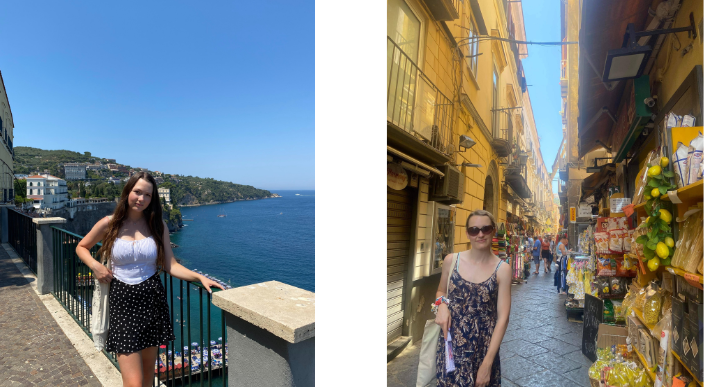
The great thing about Naples is that it’s just around the corner from the world-famous Amalfi Coast. We decided to visit the town of Sorrento, quieter and easier to access than the more famous Positano. It’s just a 40 minute boat ride across the Bay – boats in Italy don’t seem to be the most organised method of transportation, so make sure you allow yourself plenty of time to get there! Sorrento is a beautiful town overlooking the Bay of Naples, so you still get to enjoy the views of Vesuvius from its beaches. With its tiny streets filled with shops selling local delicacies, it really feels like traditional old-fashioned Italy. You’ll notice that lemons are everywhere – Sorrento and the surrounding Amalfi Coast is famous for them. The shops were also selling packets of seasoning mixes for pasta, including famous dishes like arrabiata as well as more simple herb mixes, allowing you to create the tastes of Italy at home. We spotted these throughout the week in both Naples and Rome, with many of them coming with novelty mixing spoons (so I obviously had to get one!).
We stopped for lunch – sampling the famous lemons of Sorrento with a limoncello spritz – then headed down to the beach. It was pretty busy (expected for July) and you did have to pay for sunbeds, but it was worth it just to cool down in the sea! It’s easy to spend the whole afternoon on the beach, just make sure you stay hydrated and don’t get heat exhaustion like I nearly did! We were able to sit completely in the shade, as all of the sunbeds came with umbrellas. From the decking surrounding the water, it was just a quick climb down into the cool sea. There aren’t many places in this part of Italy to cool off, as most of the hotels tucked into old townhouses with no space for pools, but when you’re surrounded by the Mediterranean you just have to jump in!
Herculaneum
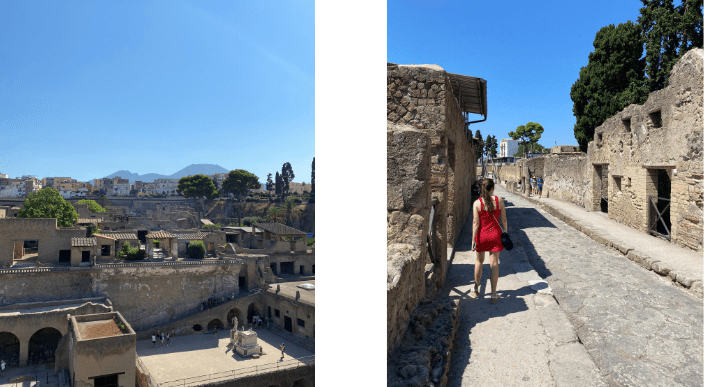
Day 3 was our last day in Naples, and also my sister’s birthday! Initially we planned to travel down to the famous destroyed city of Pompeii, but halfway through the insufferably hot journey on a crowded train we changed our plans. In between Naples and Pompeii sits the remains of Herculaneum, another city destroyed by the eruption of 79AD. If you’re looking to explore this area’s tragic history without the crowds, I’d definitely recommend Herculaneum. Quieter than Pompeii and much better preserved, Herculaneum offers an incredibly detailed look into Roman life before it was destroyed by Vesuvius. Complete houses and rooms still stand, with many features such as intricate mosaics still mostly intact. Whilst Pompeii was heavily damaged by falling debris from the volcano before the pyroclastic flows hit, Herculaneum was completely buried by the ash coming down off the mountain, perfectly preserving the buildings and people beneath it.
Again, like with our trip to Sorrento, I’d recommend not going when it’s too hot. There isn’t much shade, so make sure you stay hydrated and take breaks! But it was definitely worth it – the eruption of 79AD is such a key part of this region’s history, and it was humbling to walk the streets of a town that was destroyed in a matter of minutes. Earlier in the trip we also visited the Naples National Archaeological Museum, which contains many artefacts from both towns. These include pottery (most of which is still intact) and statues, which do not look like they were previously buried by boiling hot ash. It’s incredible to see how preserved everything is, and it was so interesting to learn about one of nature’s deadliest giants.
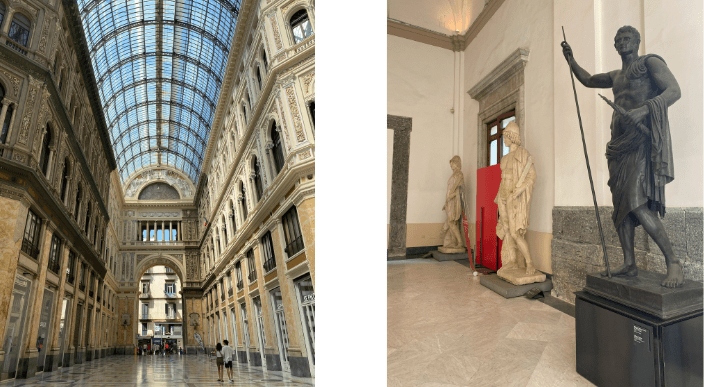
Much like most of Italy, Naples is full of rich history, culture and food. Often overlooked as a city worth visiting due to its run-down appearance, many people don’t realise that Naples is full of hidden treasures. From the museums filled with ancient artefacts to the towns hidden in the shadow of Mount Vesuvius, Naples is a hidden gem. I’ll certainly be going back, mainly to explore Pompeii and Positano when it’s not the country’s hottest summer on record!

 Jetsetterss